Chongqing is a steep, layered river city where roads, bridges, monorails, and towers stack on top of each other in a true 3D maze.
Built into mountains at the meeting point of the Yangtze and Jialing Rivers, Chongqing feels like a vertical playground for photography. Old stairways sit under elevated roads, neon signs cut through fog, and monorails slide past apartment windows. It is the right choice if you like bold, urban, futuristic energy with a bit of grit.
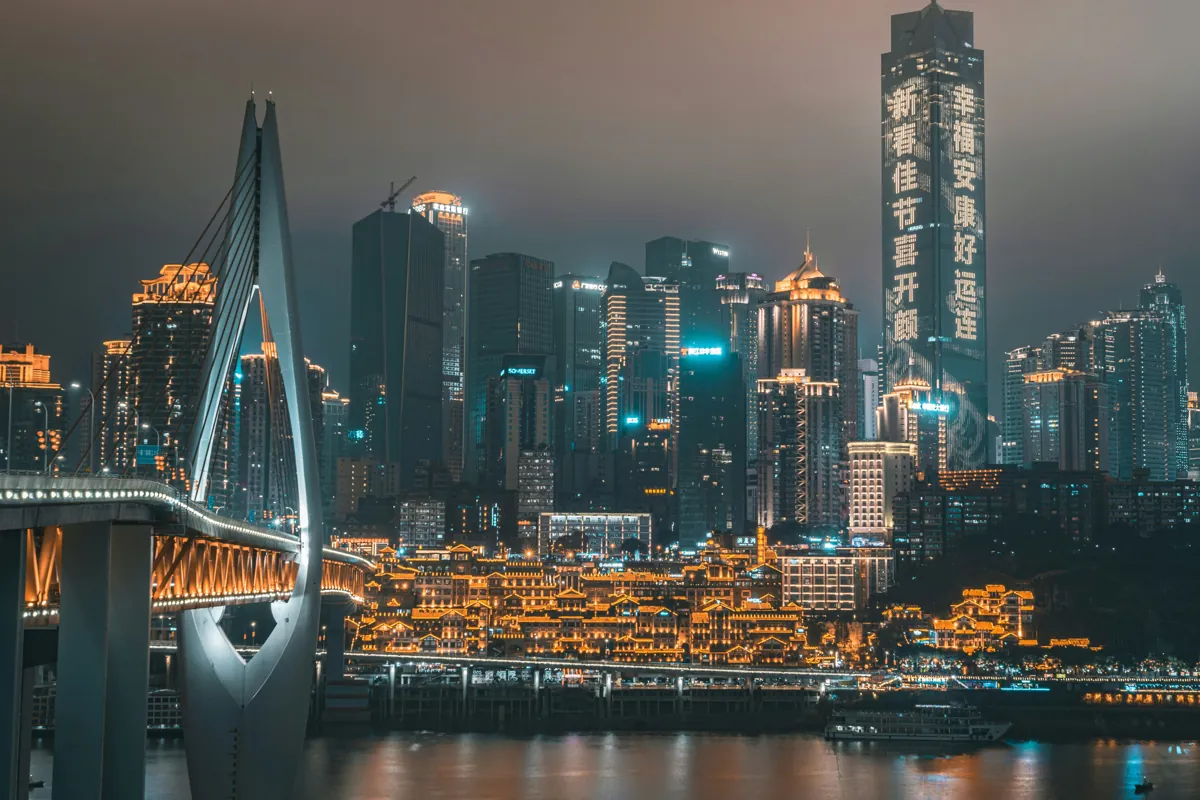
Night view of Hongya Cave (洪崖洞) and the skyscrapers of downtown Chongqing, with Qiansimen Bridge lit up over the Jialing River.
Example Photos
Click to see examples • 1 photo
Expectations for chongqing
Best Season
Spring from March to April and autumn from October to November offer the most comfortable weather and a good balance between fog, clear views, and moderate temperatures.
Weather
Chongqing is famous as a foggy, humid mountain city. Skies are often overcast and rain is common, which creates soft light and reflective streets that actually help night photos look better.
What to Wear
Urban, slightly edgy outfits work best. Think monochrome or strong color accents, layered streetwear, and clothes you can move in comfortably on steep steps.
Light and Locations
Blue hour and night are the highlight here, with neon, building lights, and fog combining into a very cinematic backdrop across the rivers and hills.
Featured Photos
A quick look at how Chongqing appears in photos, from neon soaked river views to monorails and old stairways.
ms. g — couple
ms. g — couple
Chongqing: Vertical City and Neon River Views
Chongqing is a mountain city turned mega metropolis, full of layers, fog, and lights. It is made for people who enjoy strong urban energy and offbeat viewpoints.
A 3D Metropolis with a Fiery Personality
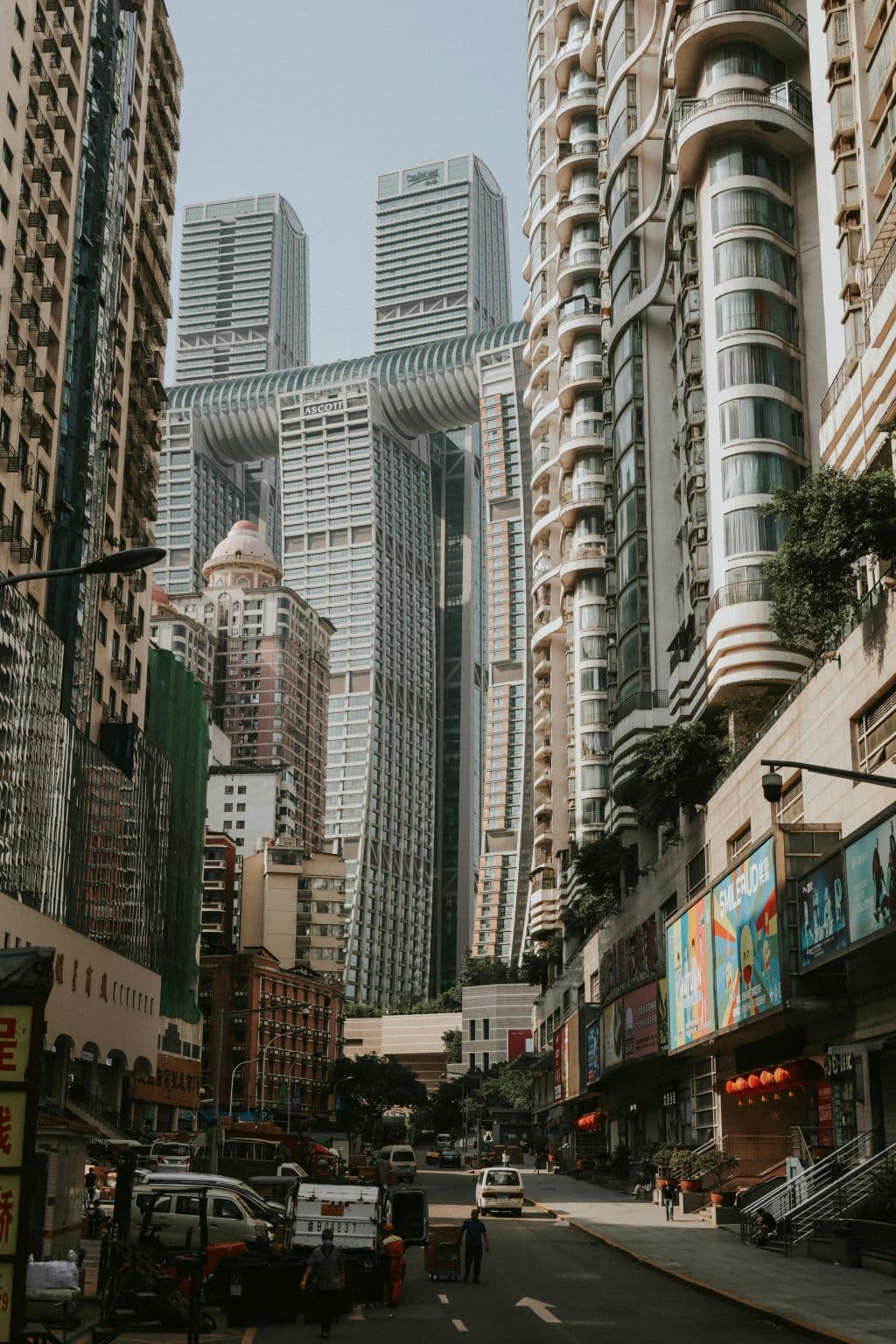
Chongqing is built into cliffs and hills, so the city naturally stacks roads, houses, and towers on multiple levels. You can stand on a bridge that passes in front of a living room window and under another road at the same time.
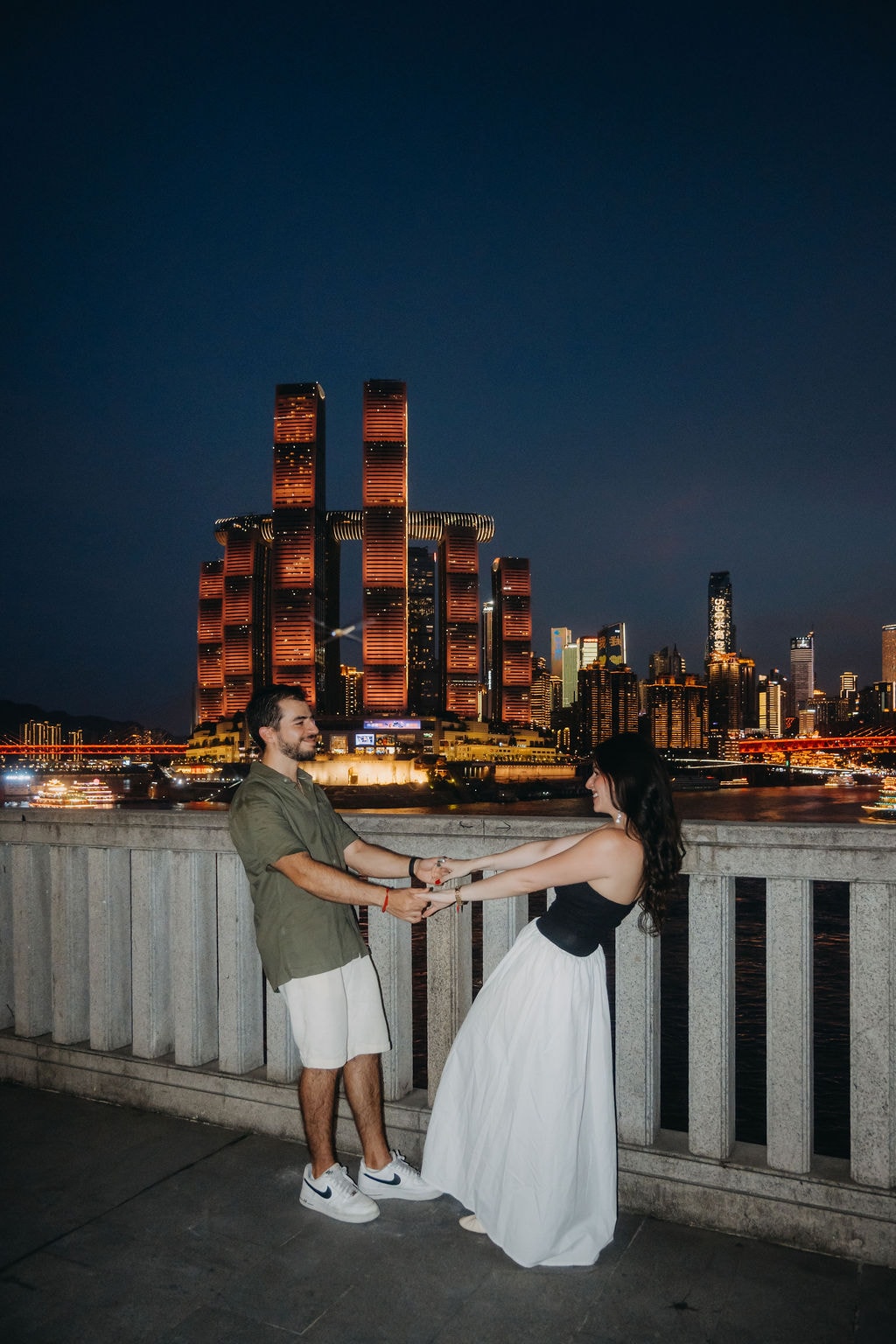
Couple portrait by the river at night in Chongqing, with Raffles City skyline as the background.
The atmosphere is a mix of old mountain town habits and bright, modern high rises. Spicy food, direct local dialect, and hilly neighborhoods sit right next to glass towers and riverside skylines that feel almost like a live action game.
How Chongqing Looks in Photos
Chongqing’s nickname as a foggy city is well earned. The mist softens edges and spreads light from signs and windows, especially at night. This gives the streets a subtle cyberpunk glow without needing any special effects.
From many viewpoints you can see bridges, elevated roads, monorails, and tower blocks all layered in one frame. It feels like a vertical collage, where every level has its own story, from highway traffic to people hanging laundry on tiny balconies.
Down in the old stair areas such as the Old City Steps, narrow alleys and long flights of stairs show everyday life in the shadow of larger structures. These pockets give a nice balance between gritty detail and big city scale.
Where We Love to Shoot in Chongqing
Chongqing rewards moving between high, mid, and ground level spots. A simple plan often links one viewpoint, one riverside area, and one older stair or alley zone in the same session.
Hongya Cave (洪崖洞) for its layered wooden stilt houses glowing at night against modern high rises, especially from the bridge and riverside viewpoints nearby.
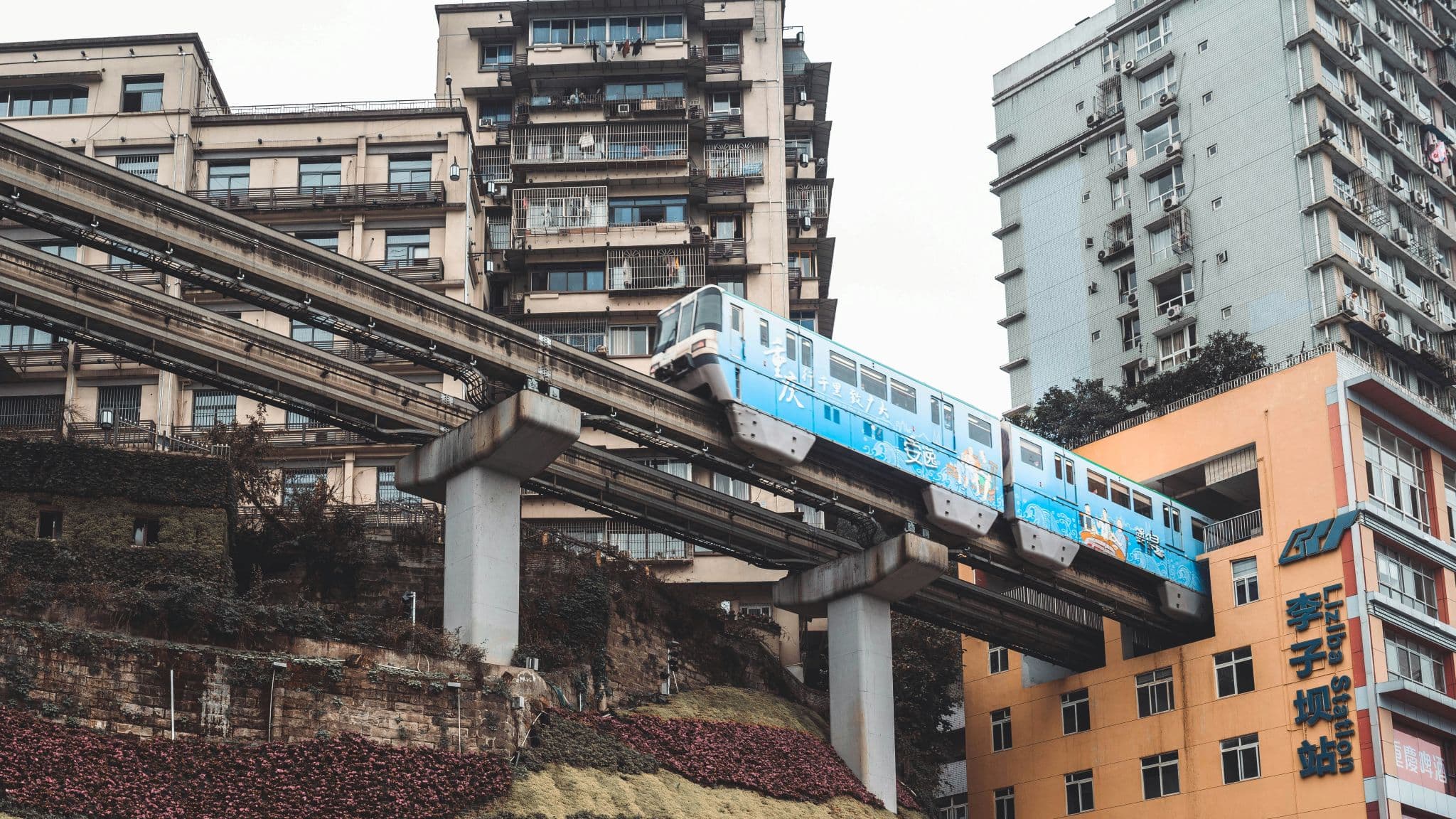
Liziba Station Monorail (李子坝站) to capture the light rail passing through a residential building, a defining image of Chongqing’s 3D city layout.
Nanshan Mountain (南山) and Yikeshu Viewing Platform (一棵树观景台) for wide skyline and river views, especially at sunset and blue hour.
Chaotianmen Square (朝天门广场) where the Jialing and Yangtze Rivers meet, with strong views of bridges, passing boats, and the Raffles City complex.
Ciqikou Ancient Town (磁器口古镇) for a contrast of old stone lanes, snacks, and crowded hill streets that still keep a traditional texture.
Seasons and Weather
Spring from March to April and autumn from October to November are the easiest seasons to explore. Temperatures are milder and the fog still appears without feeling too heavy.
Summers are very hot and humid, so early morning and late evening are the most comfortable times to shoot. Winters are damp and can feel chilly even if the temperature is not extremely low.
Rain is common throughout the year. Instead of treating it as a problem, it is often better to work with it. Wet streets reflect neon and car lights, which adds extra layers to night photos and long exposures.
Styling Ideas That Fit Chongqing
Chongqing suits outfits that lean urban, modern, and slightly bold. Monochrome looks in black, gray, or white, or simple base outfits with a strong color accent such as deep red or electric blue, sit well against the concrete and lights.
Leather or denim jackets, hoodies, cargo pants, sleek trousers, or simple but structured dresses all work nicely. Functional layers that handle stairs, light rain, and changing temperatures are more useful here than delicate fabrics.
Comfortable sneakers or flat boots are almost mandatory because of the amount of uphill and downhill walking. Geometric accessories and subtle techwear details match the city’s more futuristic side without going over the top.
Core Photography Themes in Chongqing
Neon noir, using wet streets, signs, and building lights at night to create a layered, cinematic feel.
Megastructure focus, highlighting bridges, elevated roads, towers, and monorails in a single frame.
River of light, capturing long exposure trails from boats and cars along the Yangtze and Jialing Rivers.
Alleyway life, zooming in on small human moments on staircases and in narrow lanes inside the huge city structure.
Local Insights and Culture
Hotpot is more than food in Chongqing. The mix of chilies and Sichuan pepper seems to be everywhere, from restaurant signs to the steam that spills out onto the street. A steaming hotpot table can be a fun extra scene either before or after a shoot.
Because the city is so vertical, walking a short distance on a map can feel like climbing a small mountain. The good news is that monorails, public elevators, and hillside escalators can double as both transport and interesting photo spots.
The local dialect has a reputation for being direct and lively, which fits the overall character of the city. Even if you do not understand every word, the tone and rhythm add to the background energy in your photos and videos.
Practical Photo Tips for Chongqing
Plan for blue hour and night shoots, when fog and lights blend together and the city shows its most dramatic side.
Use a fast lens and be comfortable with higher ISO settings, because many of the best views and alleys have low light.
Look for viewpoints where you can stack multiple levels of the city, such as a bridge above roads and towers with the river in the background.
Play with slower shutter speeds to turn car headlights, monorails, and boats into light trails.
Do not be afraid of rain or thick mist. These conditions help Chongqing look like itself and add depth and reflection that clear skies cannot provide.
Breathable fabrics in summer; layers/coat in winter; comfy shoes for walking.
Light & Locations
Bund sunrise, Pudong skyline, French Concession streets, riverside parks.
Tips for Conducting Sessions in chongqing
Wardrobe and Styling
Lean into modern, urban streetwear that can handle hills and rain.
Monochrome outfits or simple color blocking work well in Chongqing, especially with strong city backgrounds.
Layering is helpful. Jackets, hoodies, and outer shirts can be taken on and off as you climb between humid streets and breezy viewpoints.
Best Times and Light
Chongqing earns its reputation after dark.
Blue hour and night are when the city really shows its character. Plan at least one main shoot around that time.
If you shoot during the day, overcast skies are fine. They give soft light that suits both portraits and architecture.
Weather and Backup Plans
Rain and fog are part of the package.
Keep a compact umbrella or hooded jacket with you. Light rain often looks great in photos, especially with neon.
Have one or two covered locations in mind, such as under highways, in station areas, or in older arcades, for short breaks.
Comfort and Movement
Your legs will work, so dress accordingly.
Choose sneakers or flat boots with good grip. Many iconic areas involve long staircases and slopes.
Travel light. A small bag with essentials is easier to carry up and down than a full backpack.
Crowds and Timing
Pick your moments at popular spots.
Hongya Cave and Chaotianmen Square are busiest in the evening and on weekends. Arriving slightly earlier can still give you lights without being completely packed.
Liziba Station is a functioning transit stop, so there will always be some people. Short, timed bursts of shooting as trains pass usually work best.